


Think of two businesses offering a similar product. One has a recognizable name, clear message, consistent design and helpful customer experience. The other changes its look and tone on every platform. Even when both have good products, the first is easier to understand and remember. This is why brand identity design matters.
A brand is more than a logo. It is the set of ideas, messages and experiences people connect with your business. A useful identity makes those ideas easier to recognize wherever customers meet you.
Understand the difference between brand and identity
Your brand is the overall impression people develop through your products, service, communication and reputation. Your brand identity is the system you use to express that impression: name, logo, colors, typography, imagery, writing style and design rules.
A beautiful logo cannot repair a poor customer experience, but a thoughtful identity can communicate what the business stands for. The aim is alignment. What you say, what customers see and what the business delivers should support the same promise.
Begin with the people you want to reach
Effective branding starts with research, not a color palette. Ask who your customers are, what they care about and why they might choose you over alternatives. Look at category expectations and direct competitors. What language does everyone use? What is missing from the conversation?
Your positioning should explain the customer need you serve and the value you provide. Avoid vague claims such as “best quality” unless you can support them. A specific promise, delivered consistently, is more useful than a long list of flattering adjectives.
Give your brand a clear personality
Choose a few qualities that reflect how the business should communicate. A healthcare provider may need calm, reassuring language. A creative studio may use a more energetic voice. A technical B2B brand may value precision and clarity.
Translate these qualities into practical decisions. Should captions sound conversational or formal? Which words describe your services accurately? How should you explain a difficult issue? Document examples so future writers, designers and service teams can follow the same direction.
Create a flexible visual identity system
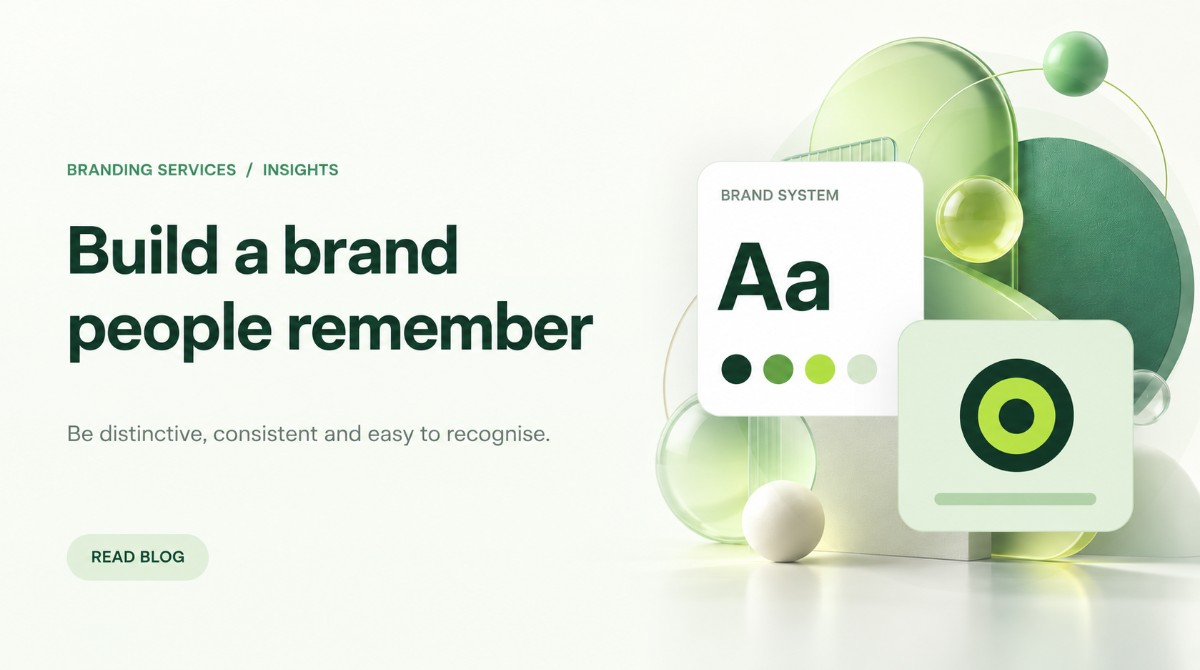
A strong identity includes more than one logo file. Consider typography, color combinations, spacing, icon styles, imagery, templates and how elements behave across small and large formats. The design must remain clear on a mobile screen, a website banner, a business card and a physical product.
Consistency does not mean making every design identical. A flexible system allows variety within recognizable rules. For example, social posts can change layout while keeping familiar type, color and tone. This helps people connect separate interactions to the same brand.
Write brand guidelines people will actually use
Brand guidelines should solve daily problems. Show correct logo spacing, acceptable colors, type hierarchy, image treatment and examples of captions or headlines. Include simple “do” and “avoid” examples. A huge manual that nobody opens is less helpful than clear instructions used by the team.
Share approved assets in one easy-to-access place. Make sure external agencies, printers and freelancers receive the right versions. This reduces rushed redesigns, inconsistent campaigns and repeated approval questions.
Connect branding with the customer experience
People notice whether a brand promise appears in real interactions. If your communication says you are simple and transparent, confusing pricing or a complicated support process creates tension. If you promise personal service, automated replies alone may not meet expectations.
Review the website, social channels, packaging, invoices, presentations and customer messages as one journey. Look for places where design or tone changes unexpectedly. Small corrections can make the experience feel more reliable without requiring a full rebrand.
Know when to refresh rather than replace
A brand refresh may improve typography, digital usability or messaging while keeping familiar features that customers recognize. A full rebrand is a larger change and should follow a clear business reason, such as a major shift in audience or offering.
Before changing everything, ask what already works. Customer recognition has value. Test proposed changes against practical uses and seek feedback from relevant customers or internal teams. Design trends alone are rarely a strong enough reason to abandon established brand equity.
Measure branding through useful signals
Brand growth is not captured by one number. Look at customer recall, direct searches, repeat enquiries, consistent use of brand assets and the quality of audience feedback. Track whether customers can explain what you offer and how you differ. These signals need context, but they can show whether identity work is improving clarity.
Frequently asked questions
Is a logo enough for a new business?
A logo is a useful starting asset, but basic messaging, colors, typography and practical usage rules create a more consistent experience as the business grows.
When should a company consider rebranding?
Consider it when your current identity no longer reflects the business, creates confusion or limits important uses. Research the cause before deciding how much to change.
Build recognition through clear choices
Good branding joins business thinking with useful creative design. Explore Poppy Seed's Branding Services to create an identity system that communicates clearly across customer touchpoints.