


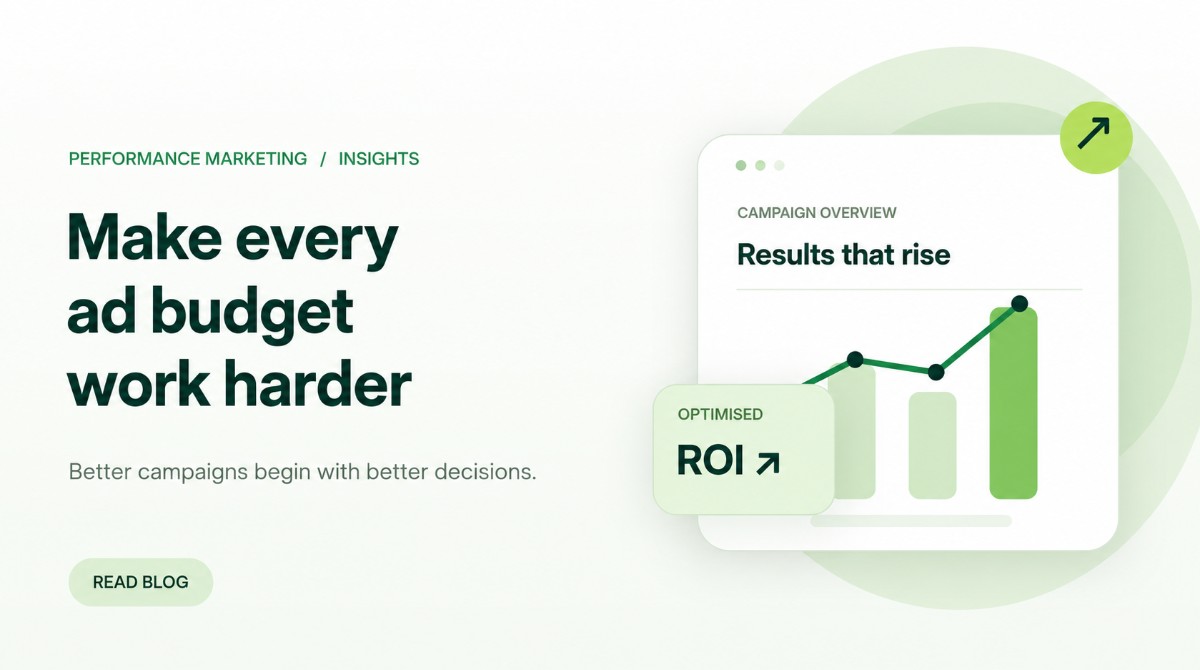
An advertising dashboard can show thousands of clicks while a business receives few real enquiries. That gap explains why performance marketing strategy matters. Good paid advertising is not about buying the most traffic. It is about connecting the right message with the right audience, measuring what happens next and improving the complete customer journey.
Define the result before choosing an ad platform
Start with a specific business outcome: qualified enquiries, purchases, bookings or another meaningful action. Awareness and website visits can support that goal, but they are not the same as a sale. Agree on what counts as a conversion and what a valuable conversion looks like.
A retailer may focus on completed orders and contribution after costs. A service company may prefer qualified calls that become sales opportunities. Make sure everyone understands the same definition before reporting begins. Otherwise, a campaign can look successful on paper without helping the business.
Match advertising channels to buying intent
Different ad platforms meet customers at different moments. Google Search Ads can reach people actively looking for an answer, product or service. Google Shopping Ads can show eligible products using a properly maintained product feed. Meta and Instagram Ads can introduce a visual offer and encourage discovery. LinkedIn Ads may suit selected professional audiences, while YouTube and display ads can support video storytelling and consideration.
Choose channels based on the customer journey, available budget and creative resources. Avoid launching on every platform simply because it exists. One focused campaign with clean measurement can teach you more than several poorly maintained campaigns.
Research the offer, audience and competition
Before writing an ad, ask three questions. What problem does the customer want solved? Why should they choose this offer? What proof can you show? Price, shipping, service details, product features and customer concerns all shape how an offer performs.
For search campaigns, group closely related keywords and write ads that match the user's intention. For audience-led campaigns, build useful creative angles around customer needs rather than making assumptions from demographic data alone. Check that targeting choices follow platform policies and applicable privacy requirements.
Creative quality influences performance
Even a well-structured campaign struggles with a confusing advertisement. A strong creative explains the offer quickly, looks consistent with the brand and gives one clear next step. Test several genuinely different approaches: a product demonstration, a customer problem, a simple comparison or an educational explanation.
Change one major idea at a time when possible. If every headline, image, audience and landing page changes together, it becomes harder to learn what improved results. Creative testing should produce insights, not just a large folder of new ads.
Your landing page is part of the campaign
Imagine clicking an ad about a particular service and arriving on a generic homepage. The visitor now has to search again. This friction can waste your budget even if the original ad was relevant.
Build landing pages that continue the promise made in the advertisement. Use a clear headline, useful benefits, appropriate evidence and a visible contact or purchase action. Keep forms practical, make the mobile experience smooth and explain important terms before the customer commits. Test pages on actual phones, not only a desktop preview.
Measure what matters and protect data quality
Set up analytics and conversion events before scaling spend. Verify that important actions fire correctly, are not counted twice and respect user consent choices. Review platform attribution with care: reported conversions can vary because platforms use different methods and time windows.
Useful metrics include cost per qualified lead, purchase conversion rate, average order value and return on ad spend. But context matters. A high return on ad spend does not automatically mean a profitable business once production, delivery, discounts and agency costs are considered.
Optimize with a repeatable review cycle
Review search terms, feed issues, placement quality, creative fatigue, landing-page behavior and actual sales feedback. Pause clear waste, improve what is working and give promising experiments enough data to be meaningful. Use budget changes in measured steps rather than reacting to every daily fluctuation.
Write down your findings: what changed, why it changed and what you expect to happen next. These notes make future decisions much stronger, especially when several people manage the account.
Frequently asked questions
How much should a business spend on paid ads?
There is no universal minimum that guarantees results. Start with an amount you can afford to test, considering audience size, competition, expected conversion rates and the value of each customer.
Is PPC the same as performance marketing?
PPC is one common payment model. Performance marketing is broader: it connects media planning, campaign execution, measurement, creative and conversion improvement to business outcomes.
Build campaigns around meaningful growth
Better performance comes from an aligned offer, reliable tracking, relevant ads and a useful website experience. Explore Poppy Seed's Performance Marketing services for a coordinated approach to paid media, creative testing and ongoing improvement.